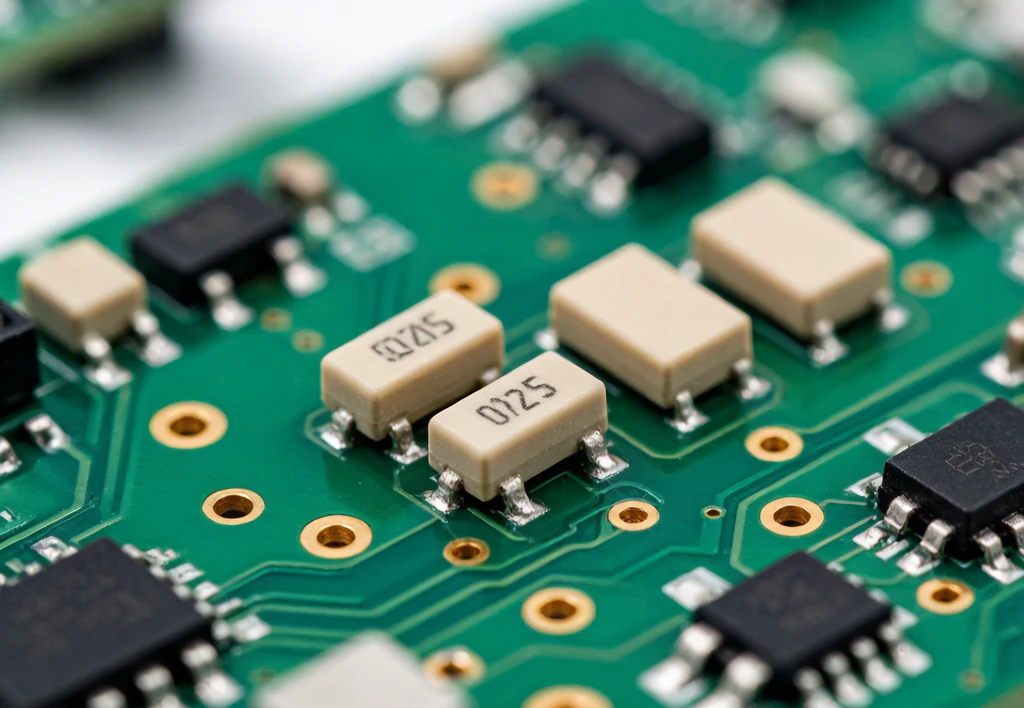
MLCC sourcing decisions have become increasingly strategic as allocation cycles, geopolitical trade restrictions, and automotive electrification reshape the supply chain. This guide compares global and domestic MLCC brands across performance, availability, and cost dimensions to help sourcing teams build a resilient multi-brand strategy.
Murata is the global MLCC market leader with an estimated 30-40% revenue share. The GRM series covers general-purpose applications, while the GJM and GQM series target RF/high-Q applications. Murata's GCM series is AEC-Q200 qualified for automotive. Strengths: industry-leading capacitance density, lowest ESR/ESL in RF parts, and the most comprehensive AEC-Q200 portfolio. Considerations: longer lead times during allocation, premium pricing.
Samsung Semco is the second-largest MLCC manufacturer globally. The CL series covers the full range from 01005 to 2220. Samsung's automotive-grade parts carry the CL series AEC-Q200 designation. Strengths: competitive pricing, strong supply chain scale, good capacitance density in X7R/X5R. Considerations: RF performance lags Murata in some high-frequency bands.
TDK's C-series MLCCs are widely used in automotive and industrial applications. The CGA series is AEC-Q200 qualified. TDK also offers the CH-series RF-high-Q parts. Strengths: excellent reliability data, strong automotive presence, good high-temperature capability. Considerations: some series have limited distribution coverage outside Asia.
Taiyo Yuden (now part of TAIYO YUDEN CO.) specializes in high-Q MLCCs for RF applications. The UMK, EMK, and AMK series are widely specified in 5G and satellite communications. Strengths: best-in-class Q values at GHz frequencies, low ESR. Considerations: smaller product portfolio compared to Murata/Samsung, focused on premium applications.
KEMET (acquired by YAGEO Group) and AVX focus on automotive, aerospace, and industrial markets. KEMET's C-series and AVX's 0 series cover AEC-Q200 qualified parts. Strengths: strong in high-voltage and high-temperature MLCCs, good support for custom specifications. Considerations: lead times can extend during allocation.
YAGEO is the largest domestic MLCC manufacturer with global reach. The CC series covers standard X7R/X5R/C0G parts. YAGEO has invested heavily in AEC-Q200 qualification and now supplies automotive Tier 1 suppliers. Strengths: broadest domestic distribution network, improving quality metrics, competitive pricing. Considerations: RF performance still trails top-tier global brands for precision applications.
Walsin is a leading Taiwanese MLCC supplier with strong coverage in consumer electronics and industrial markets. The W series (e.g., 0603B, 0805B) is widely used as a cost-effective alternative to global brands. Strengths: short lead times, good support for mid-volume orders, improving AEC-Q200 coverage. Considerations: limited ultra-small package (01005) offering compared to Murata.
Fenghua Advanced Technology is one of the oldest domestic MLCC manufacturers in China. The FH series covers standard case sizes with X7R/X5R/C0G dielectrics. Strengths: established relationships with domestic Chinese OEMs, good pricing for high-volume orders. Considerations: international distribution is less developed than YAGEO or Walsin.
CCTC has rapidly expanded its MLCC capacity and is qualifying parts for automotive applications. The CCTC series targets replacement of global brand parts in consumer and industrial segments. Strengths: aggressive pricing, expanding AEC-Q200 portfolio. Considerations: newer to the MLCC market compared to Fenghua or YAGEO, qualification data still building.
ViiYong focuses on automotive-grade and industrial MLCCs. The company has AEC-Q200 qualified parts and is expanding into EV applications. Strengths: automotive focus, good quality documentation. Considerations: smaller scale than top-tier domestic brands.
Torch produces MLCCs for consumer, industrial, and automotive applications. The Tr series covers standard specifications. Strengths: cost-competitive for high-volume consumer electronics. Considerations: brand recognition outside China is limited.
Eyang (Hong Kong-based) and Holystone (Taiwan-based) serve niche markets including power electronics and industrial controls. Both offer AEC-Q200 qualified parts for select series. Strengths: responsive to custom requirements, good for low-to-mid volume specialized orders.
| Application | Recommended Brand Tier | Reason | Domestic Alternative |
|---|---|---|---|
| 5G RF power amplifier | Global (Murata, Taiyo Yuden) | Q > 1000 at 2 GHz, tight DF control | Limited — RF performance gap remains |
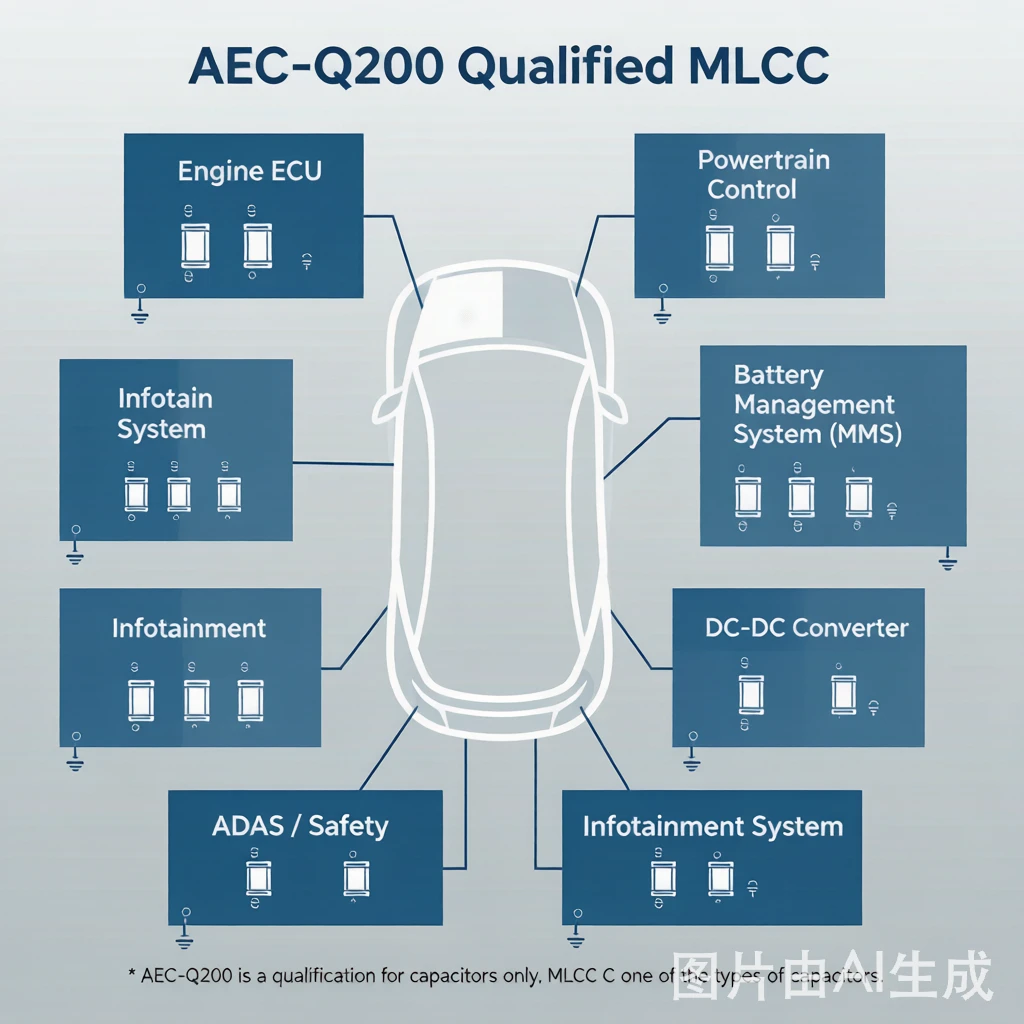
| Automotive powertrain (AEC-Q200) | Global (Murata GCM, TDK CGA) | Proven PPAP, 0 ppm target | YAGEO CC (AEC-Q200), Walsin (selected) |
| Consumer smartphone (decoupling) | Global or Domestic | X7R performance adequate from both | YAGEO, Walsin, Fenghua |
| Industrial power supply | Domestic preferred for cost | X7R bulk capacitance, cost sensitive | YAGEO, Walsin, CCTC |
| Data center server | Global (Murata, Samsung) | High-reliability, long product life | Dual-source with YAGEO for non-critical rails |
| EV on-board charger | Global (AEC-Q200) | High-voltage rating, safety certification | YAGEO (AEC-Q200 HV), ViiYong |
Global brands prioritize automotive and 5G infrastructure customers during allocation. Consumer and general industrial customers may face extended lead times (20+ weeks) during shortages. Domestic brands typically maintain more flexible capacity for commercial customers, with lead times of 4-10 weeks depending on case size and dielectric.
A dual-sourcing strategy mitigates allocation risk. However, re-qualification is required when switching brands in production. For new designs, specifying two approved brands from the start reduces future supply chain disruption. The Upload BOM tool at AIMLCC can identify dual-source opportunities in your existing BOM.
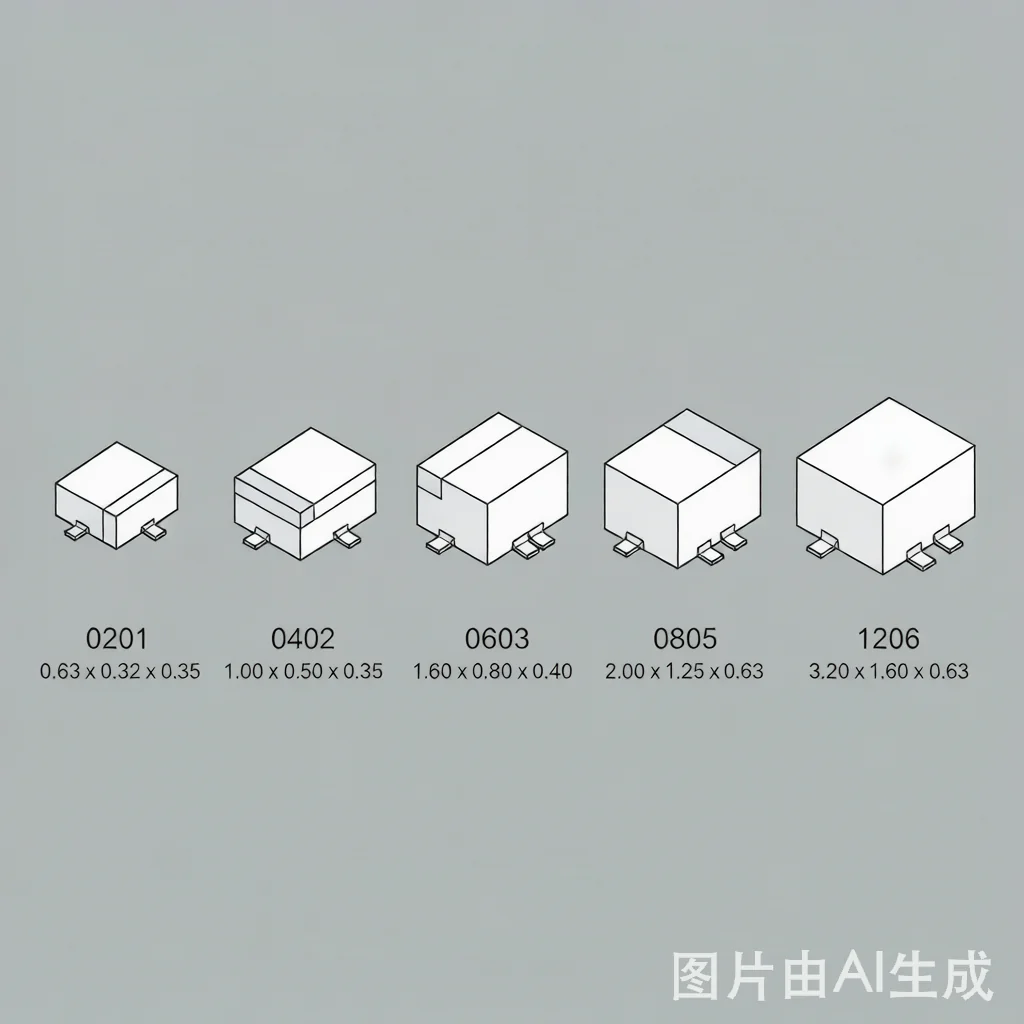
| Brand | Series / Part Number | Package | Dielectric | AEC-Q200 | Brand Page |
|---|---|---|---|---|---|
| Murata | GRM03370J_0000 | 0201 | C0G | No | Murata MLCC |
| Murata | GR321980J_0008 | 1206 | X7R | No | Murata MLCC |
| Samsung | CL03B0000 | 0201 | X7R | No | Samsung MLCC |
| Samsung | CL21B0008 | 0805 | X7R | No | Samsung MLCC |
| TDK | C1608X7R1C0000 | 0603 | X7R | No | TDK MLCC |
| TDK | C2012X7R1C0008 | 0805 | X7R | No | TDK MLCC |
| YAGEO | CC0201KRX7R0000 | 0201 | X7R | No | YAGEO MLCC |
| YAGEO | CC0805KRX7R0008 | 0805 | X7R | No | YAGEO MLCC |
| KEMET | C0603C0000 | 0603 | C0G | No | KEMET MLCC |
| KEMET | C0805C0008 | 0805 | X7R | No | KEMET MLCC |
| Walsin | 0603B000 | 0603 | X7R | No | Walsin MLCC |
| Walsin | 0805B008 | 0805 | X7R | No | Walsin MLCC |
| Fenghua | FH0201X7R000 | 0201 | X7R | No | Fenghua MLCC |
| Fenghua | FH0805X7R003 | 0805 | X7R | No | Fenghua MLCC |
| CCTC | CCTC0201X7R000 | 0201 | X7R | No | CCTC MLCC |
| CCTC | CCTC0805X7R003 | 0805 | X7R | No | CCTC MLCC |
For complete part specifications, click through to the individual part detail pages or submit an RFQ with your requirement.
When deciding between global and domestic brands, consider these factors:
Q1: Are domestic Chinese MLCCs reliable enough for automotive use?
A: Selected series from YAGEO, Walsin, and ViiYong are AEC-Q200 qualified. For production use, verify the specific part number's qualification status and request PPAP documentation from the supplier.
Q2: How much cost reduction can domestic brands provide?
A: For standard X7R/X5R parts in high-volume, domestic brands typically offer 15-30% cost reduction compared to global brands. The savings are smaller for specialized RF or high-voltage parts where global brands maintain technology leadership.
Q3: Can I mix global and domestic brands on the same PCB?
A: Yes, provided each part is qualified for its specific circuit location. Mixed-brand BOMs are common in cost-optimized designs where non-critical circuits use domestic brands and critical circuits use global brands.
Q4: Do domestic brands support the same case sizes as global brands?
A: Most domestic brands cover 0201 through 1210. Coverage of 01005 and larger cases (1812, 2220) is improving but may be limited for some domestic suppliers. Check specific case size availability before designing.
Q5: How do I validate a domestic brand replacement?
A: Request samples for DC bias testing, temperature cycling, and (if applicable) AEC-Q200 qualification evidence. For RF applications, measure S-parameters and Q factor. Allow 4-8 weeks for validation testing.
AIMLCC will check current stock, lead time and alternatives based on your part numbers or BOM.

Quick RFQ