MLCC for automotive infotainment, ADAS and body electronics.
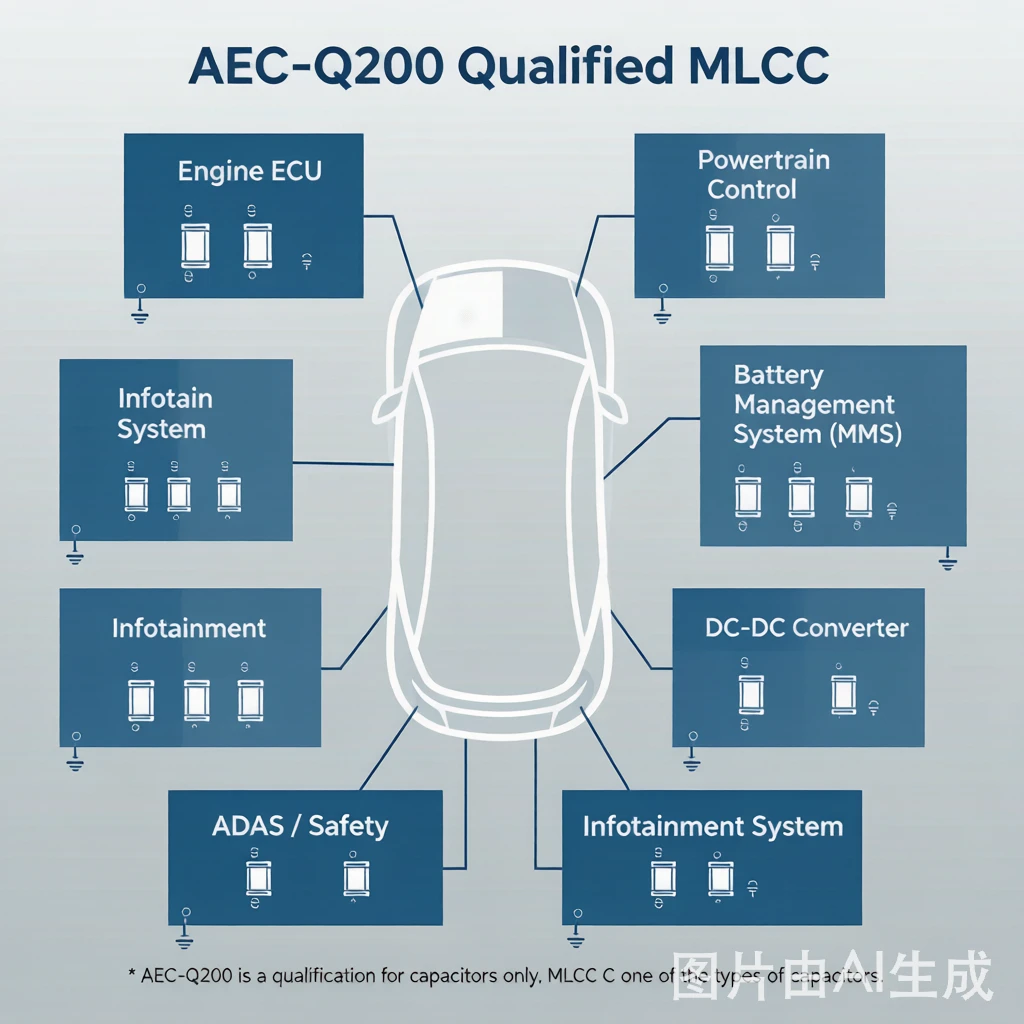
X7R for general purpose; X8R for high-temperature zones; C0G (NP0) for precision timing, sensors, and communication circuits.
0402, 0603, 0805, 1206 — smaller packages for space-constrained automotive electronics.
10V to 50V for most automotive electronics; up to 250V for some infotainment and communication circuits.
100pF to 47µF — wide range covering EMI filtering, decoupling, and signal conditioning.
Meeting AEC-Q200 qualification; ensuring reliability across temperature and vibration; and managing MLCC cracking risk in PCB flex areas.
Automotive MLCC require traceability and documentation. Long-term supply agreements and multi-source qualification are common practices.
Send your MLCC RFQ for mlcc for automotive electronics — stock check, cross reference and quotation.
X7R (-55°C to +125°C) is sufficient for most infotainment. For under-hood or high-temperature zones, consider X8R (up to +150°C).
While not always required, soft termination is recommended for PCB areas with potential flex or thermal cycling.
AIMLCC provides independent sourcing support for AEC-Q200 MLCC, including cross-reference, stock check, and documentation assistance.

Quick RFQ