RF High-Q MLCC for 5G base station and RF module applications.
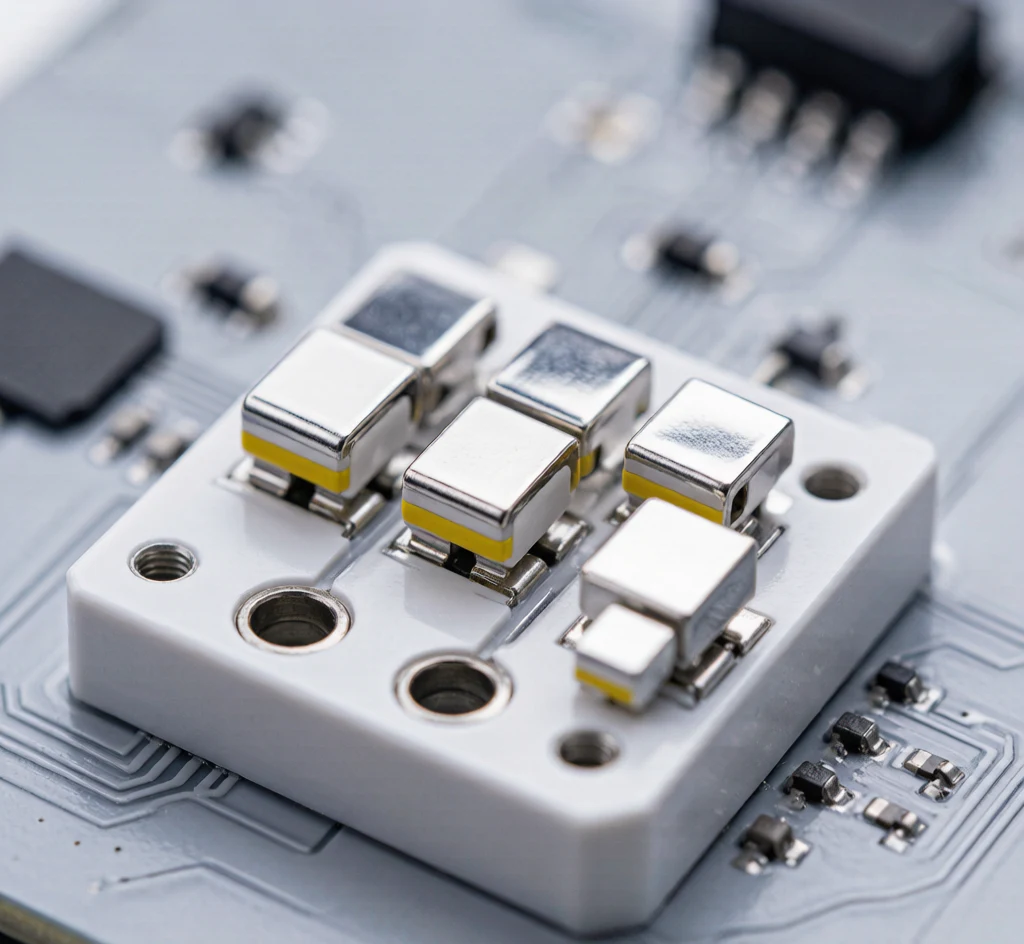
C0G (NP0) is mandatory for RF applications requiring high Q, low ESR, and frequency stability. Avoid X7R/X5R in RF signal paths.
0201, 0402, 0603 — small packages minimize parasitic inductance and are preferred for RF designs.
25V to 250V for RF circuits; 6.3V to 50V for matching and filtering applications.
0.1pF to 100nF — precision values for RF matching and filtering.
Maintaining high Q at operating frequency; minimizing parasitic inductance; and managing component tolerance in high-frequency circuits.
RF High-Q MLCC have limited sources and may require specific matching for critical RF designs. Non-magnetic options needed for some test equipment.
Send your MLCC RFQ for mlcc for 5g rf modules — stock check, cross reference and quotation.
C0G offers near-zero temperature coefficient, no DC bias capacitance loss, and extremely low dissipation factor — essential for RF matching and filtering.
Q factor > 2000 at 1MHz is typical for RF High-Q MLCC. Higher Q is needed for low-loss RF matching networks.
Yes, specify non-magnetic requirement when submitting RFQ. Non-magnetic MLCC use copper/palladium electrodes instead of nickel.

Quick RFQ